CONTINUOUS THREAT MODELING
See Where Your Risk Actually Starts
Identify whether risk starts in requirements, design, or implementation before it reaches production
You can’t control what you can’t trace
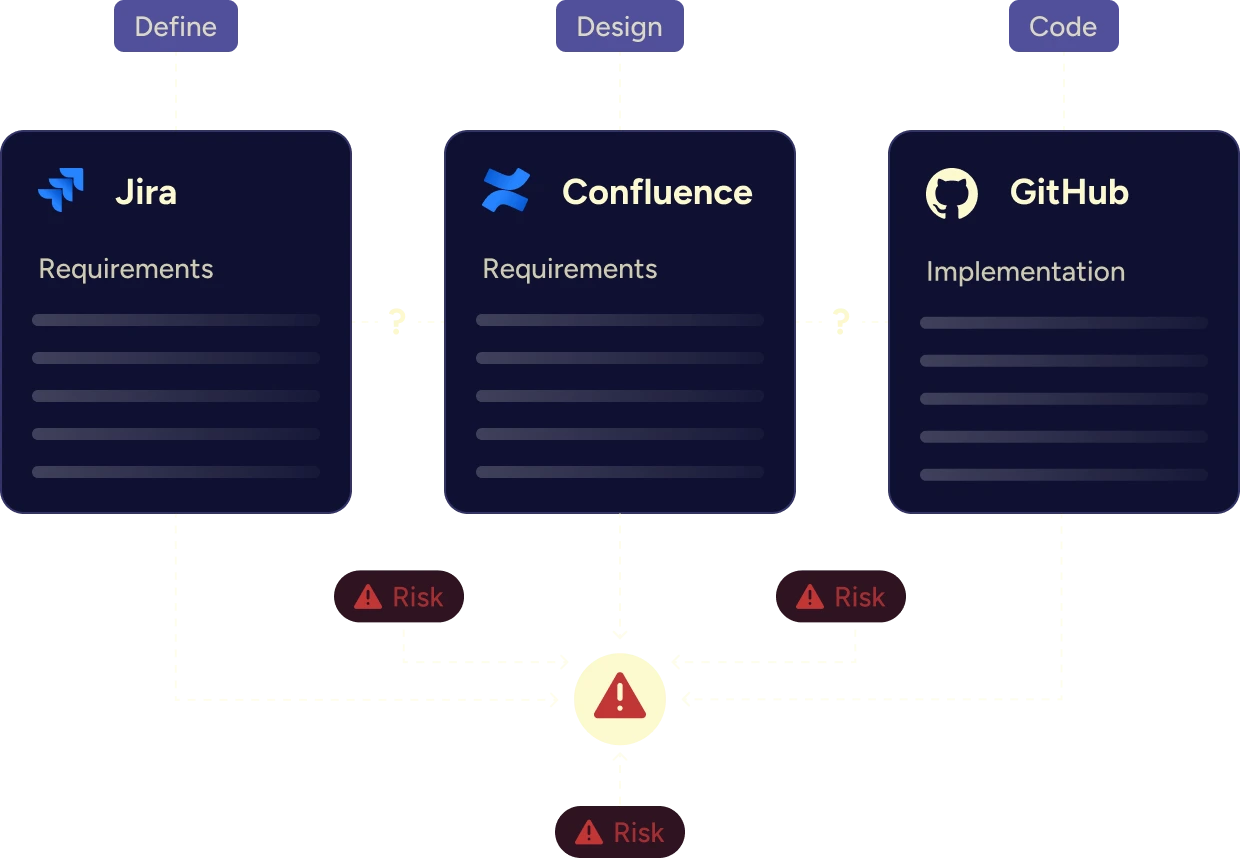
Your work lives across tools. But when risk shows up, the context is missing.

Risk shows up
But you can’t trace where it started.

Context is missing
Unclear ownership. More back-and-forth.

Fixes don’t work
Symptoms get patched, but the root cause stays.
Your team spends more time figuring out risk than reducing it.
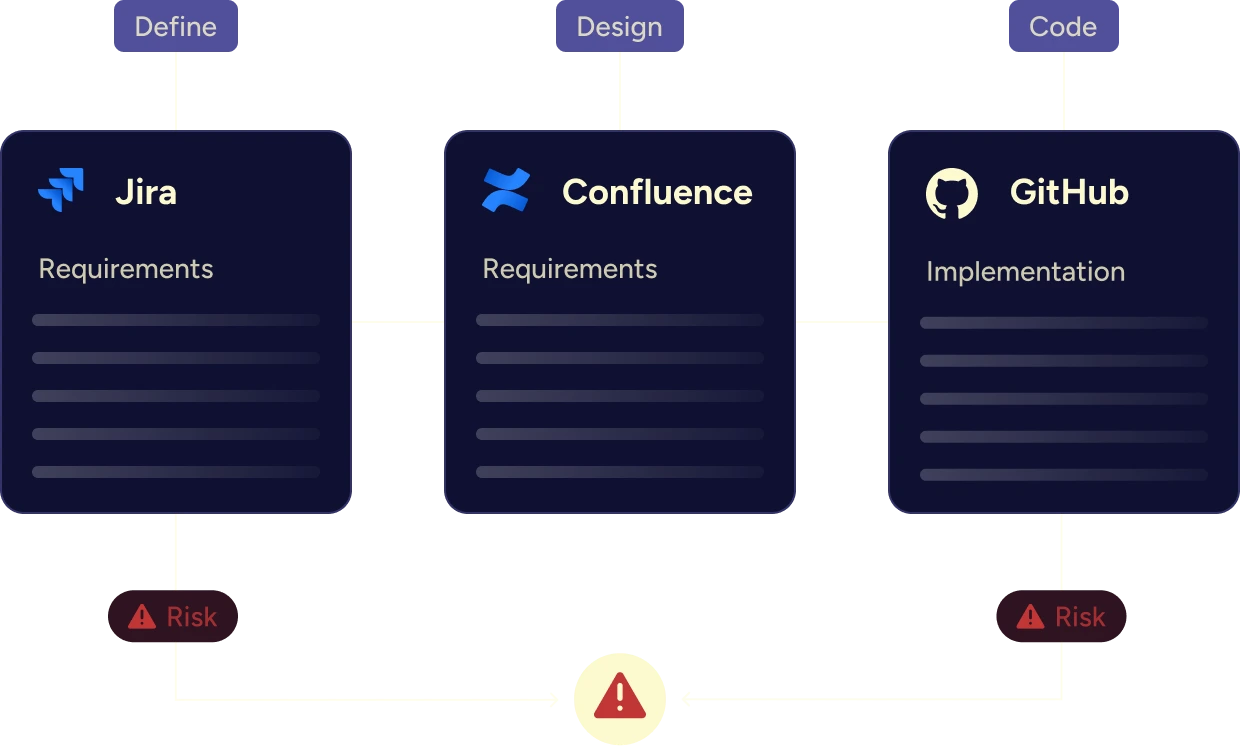
Every risk has a path
Create a continuous and defensible record aligned with EU CRA

Requirement
Defines behavior

Design
Shapes the system

Implementation
Introduces exposure

Risk
Shows up too late
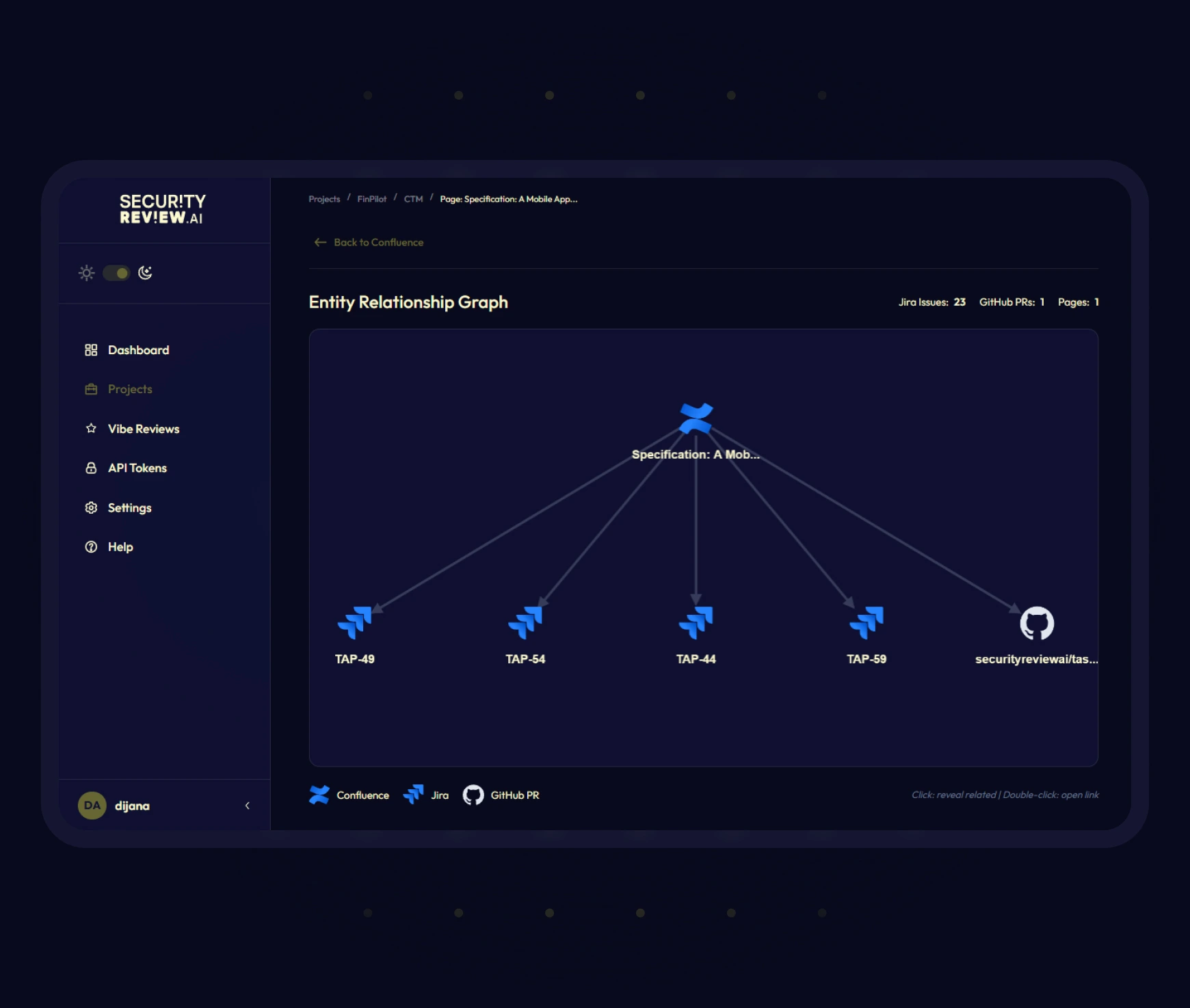
See the full risk path in one view
SecurityReview.ai connects your requirements, design, and code into a continuous threat model.
So you don’t just see the issue, but where it started, what it affects, and what to fix.

Trace risk to its source
From requirement to implementation

Understand impact instantly
See what each risk affects across the system

Fix the right problem
Resolve from the source, not just the symptom
From fragmented risk to controlled outcomes
EU Cyber Resilience Act (CRA) – Key Enforcement Dates
Act now to build traceability and visibility CRA expects.
Dec 2024

CRA published in Official Journal (OJ)
Sept 2025
Most provisions apply
Sept 2026
Obligations for Class I products take effect
DEADLINE 1
Dec 2027
Obligations for Class II & III products take effect
DEADLINE 2