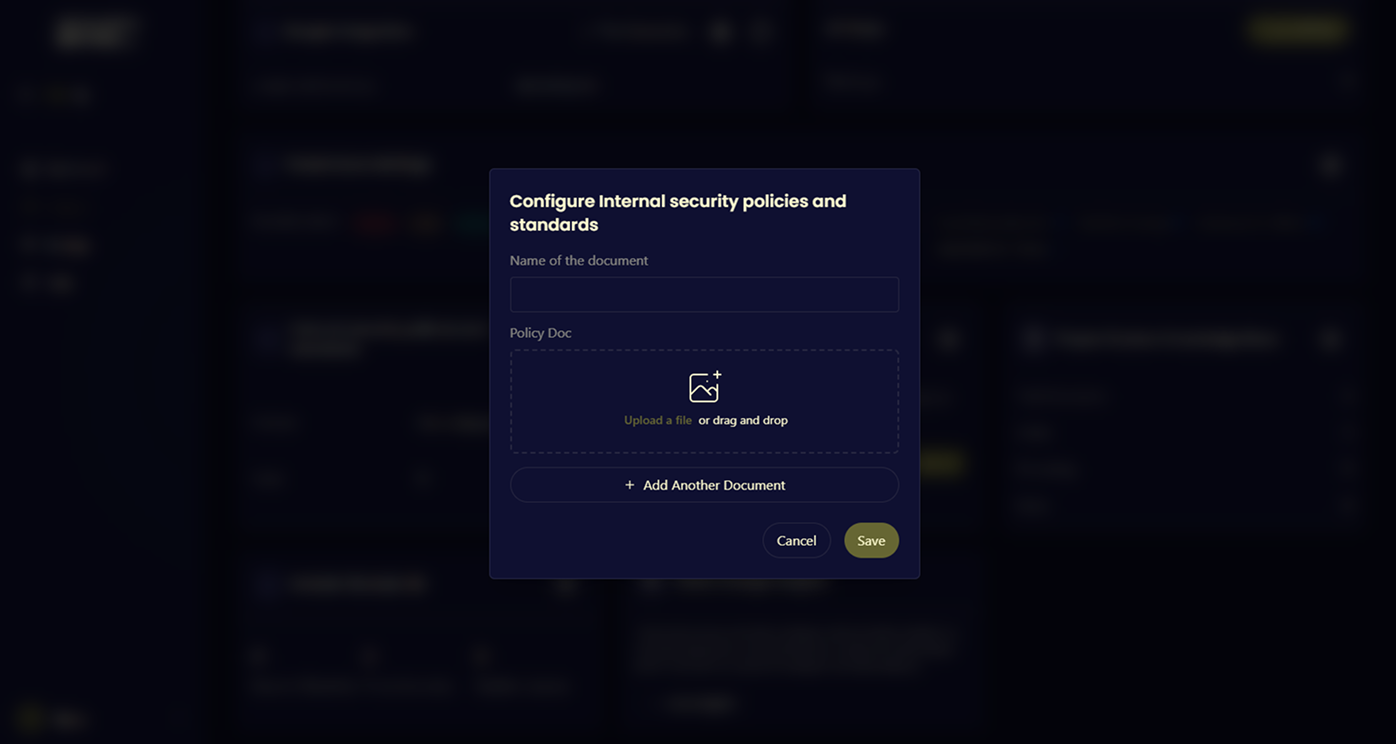
With security design and coding rules enforced during code generation, AI-generated code follows how your system is actually built


AI coding tools make it easy to generate features quickly. The code looks clean, passes checks, and moves forward without friction.
But nothing in that process ensures it follows your security design or coding standards. Each feature gets generated differently, without enforced guardrails or consistent decisions.
Over time, access control, data flow, and trust boundaries start to drift, and risk builds quietly across the system.

Understand your system
Analyze architecture, documentation, and engineering context to build an accurate model of how your system actually works.
Define security design
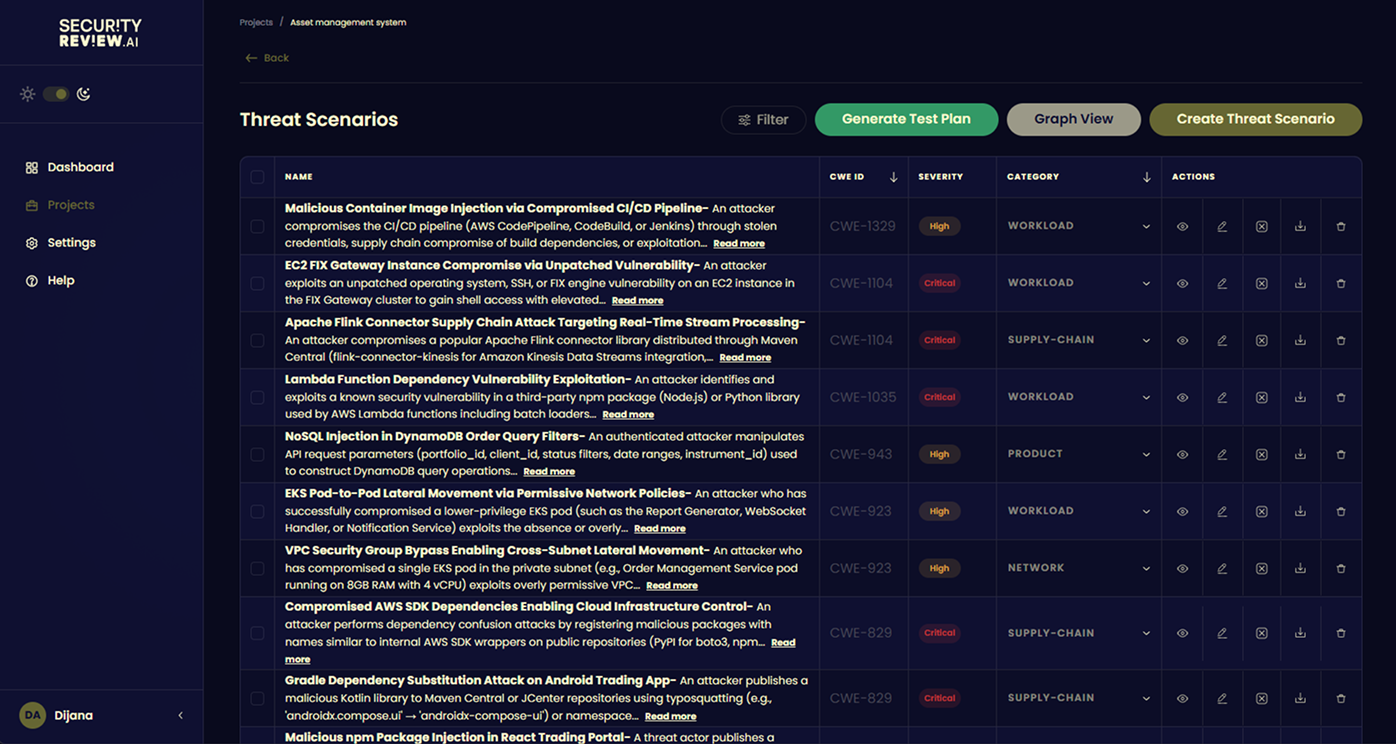
Generate system-specific threat models, risks, and security decisions based on real services, data flows, and integrations.
Enforce during code generation
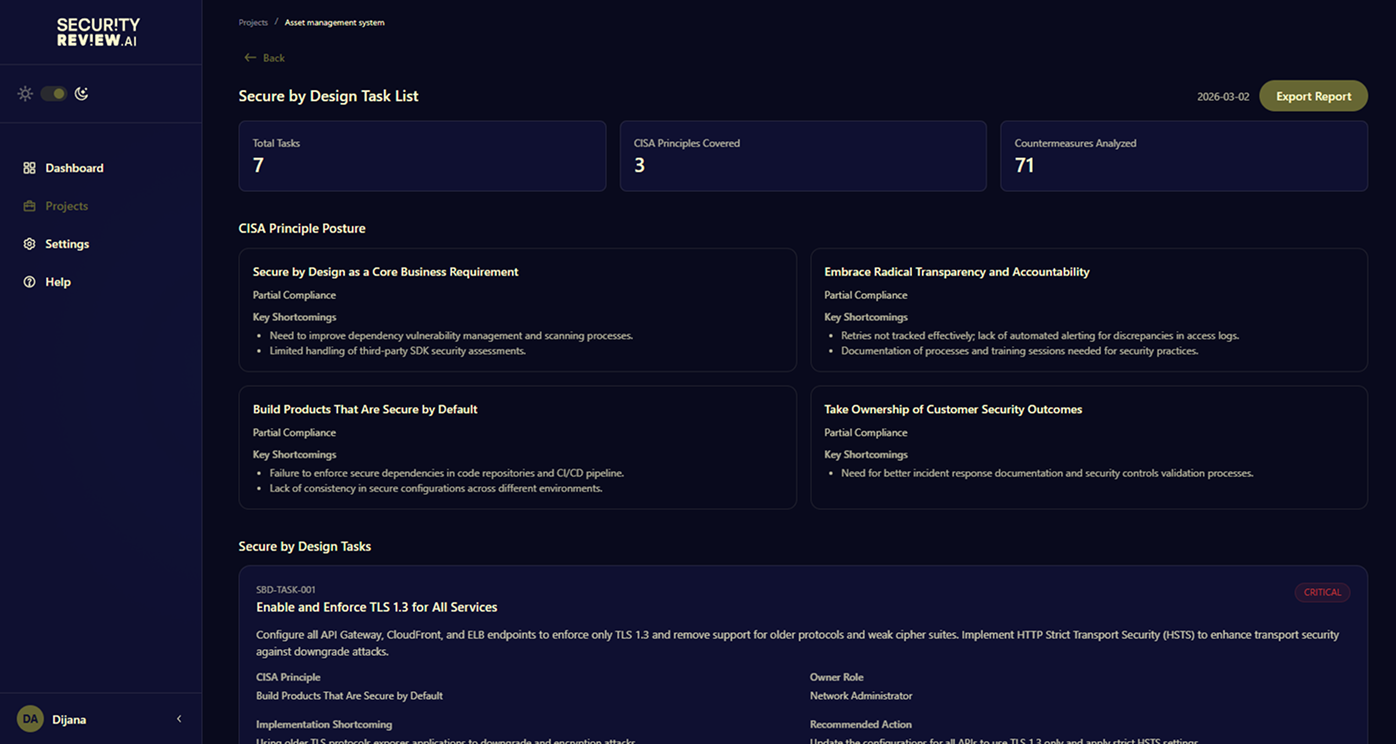
Apply security design and coding rules as code is generated, so every feature follows the same decisions from the start.
Generate audit-ready evidence
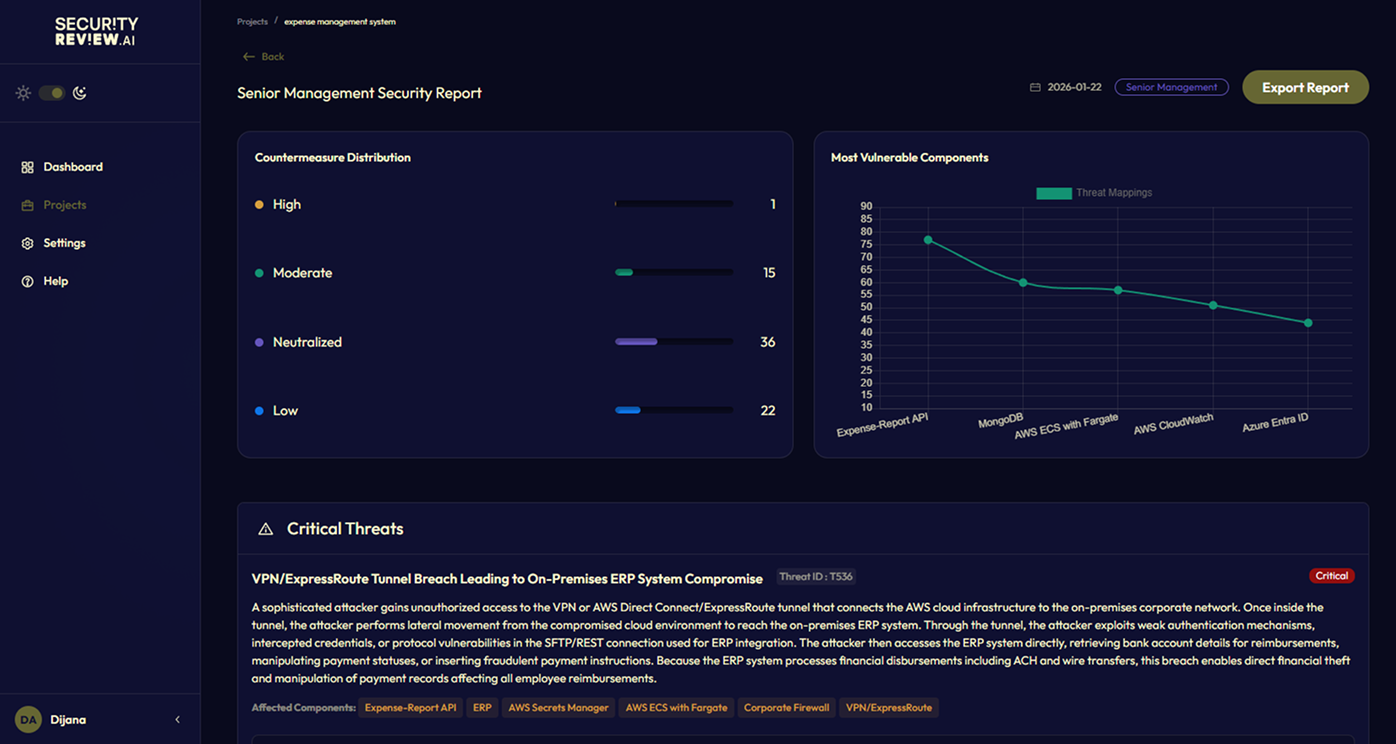
Map risks and decisions to compliance frameworks and maintain continuous, traceable security documentation.
Mapped to: DORA • EU Cyber Resilience Act • PCI DSS • ISO 27001
Frameworks like DORA, PCI DSS, ISO 27001, and the EU Cyber Resilience Act require clear, traceable evidence of how security decisions are made and enforced.
SecurityReview.ai generates that evidence continuously by connecting your system design, risks, and controls, so compliance doesn’t depend on manual documentation or last-minute effort.
Security teams get continuous visibility into risk.
Auditors get provable and traceable controls.
Stop choosing between engineering velocity and regulatory readiness. Get both.

Security issues don’t show up after code is written.They’re handled during generation, so fixes don’t pile up across sprints.


Access control, data flow, and trust boundaries don’t change from feature to feature.Every part of the system follows the same security decisions from the start.


Risk doesn’t surface weeks later in reviews or audits.It stays visible as systems evolve, tied directly to how features are built.


Security doesn’t depend on a few experts or scheduled reviews.Coverage scales with development without slowing teams down.


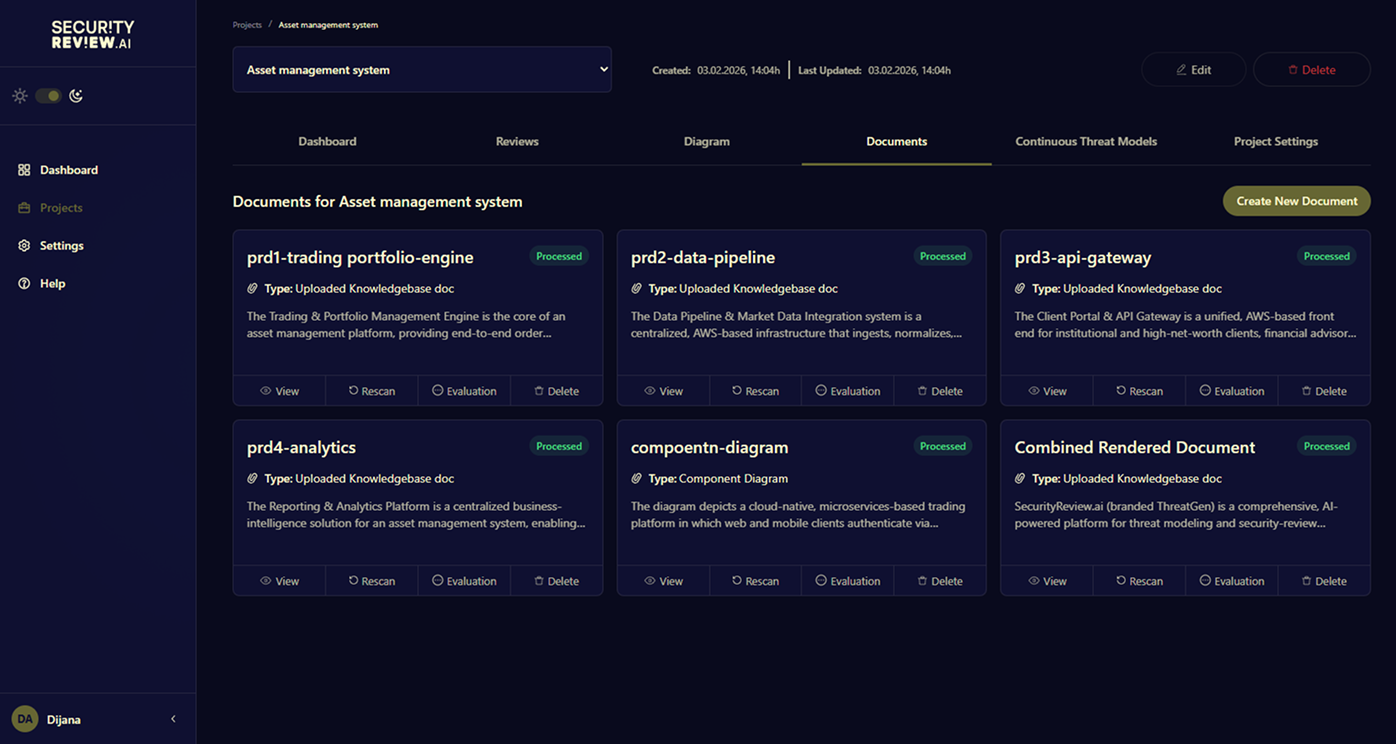
SecurityReview.ai analyzes architecture, documentation, and engineering context to model your system and define the security decisions it depends on.


VibeReview applies those decisions as code is generated, so every feature follows the same rules from the start.


Every risk, decision, and control is mapped to frameworks, creating audit-ready evidence as systems evolve.


SecurityReview.ai analyzes your architecture, documentation, and engineering context to understand how your system actually works.
Threat models are generated from real services, data flows, and integrations instead of generic templates or predefined checklists. As systems evolve, the analysis updates continuously, so security decisions stay aligned with how the system is built.
Inclusions
SecurityReview.ai
Enterprise-Ready Deployment
During code generation
Manual reviews and workshops
Continuous system analysis
Generic rules and checklists
System-specific decisions
Findings that require fixes
Issues prevented from entering code
Inconsistent across teams
Consistent across every feature
For CISOs
You don’t rely on reviews to maintain control. Security design and coding rules are enforced across every feature as it’s generated, so teams move fast without introducing inconsistency or risk.
For AppSec teams
No need to review everything manually. You define security decisions and coding guardrails once, and they’re applied automatically across developers as features are generated.
For engineering leaders
Your teams move fast without creating rework later. Developers generate code as usual, while security rules are enforced in the background, and delivery stays on track.
Methodology developed through hundreds of real-world security architecture reviews.
SecurityReview.ai is based on the methodology used by the we45 security team across hundreds of real-world security design reviews.
Organizations in finance, healthcare, government, and SaaS rely on these practices to analyze complex systems and identify real security risks.
SecurityReview.ai applies the same architecture-driven review methodology used by experienced security architects.
Instead of generic threat lists or black-box AI output, we analyze real system context to generate meaningful security insights.
Abhay Bhargav
Founder of we45 • Security Architect • Author & Trainer
Led hundreds of security architecture reviews across enterprise systems.

The tool is simple to use and has been implemented in a very well-thought way. Clearly by folks with a great deal of expertise
Head of Product Security $10b SaaS Company

SecurityReview looks fantastic! I love how it allows us to mimic Human Security Design review practices, but is made so much faster and more comprehensive because of AI
Head of Application Security, Top 50 Bank APAC region

It is going to save my US Federal Government customers a ton of time with SSDF mandates
Leading VAR/MSSP for US Federal Government companies
Those tools look at code after it’s written. SecurityReview.ai applies security decisions while the code is being generated, so issues don’t get introduced in the first place.
It uses your architecture and system context to define security rules, then applies those rules during code generation. That keeps decisions like access control and data handling consistent across features.
No. It actually removes rework and reduces back-and-forth with security teams because code already follows expected security rules.
It integrates with the tools you already use and applies security rules during code generation. There’s no need to replace your current setup.
You can see risks tied to features, decisions, and system components as they evolve, instead of discovering them later in reviews or audits.
How does this help with compliance?It continuously generates traceable evidence that links risks, controls, and system behavior to compliance requirements. You don’t have to assemble that manually later.
Yes, but they’re no longer one-time activities. Threat models update continuously as the system changes, and the decisions get enforced during development.
It builds its analysis from your actual architecture, documentation, and engineering context, not generic templates or predefined rules.